

President Trump fired Attorney General Pam Bondi on April 2, 2026, making her the second Cabinet member ousted in a month, following DHS Secretary Kristi Noem.
Deputy AG Todd Blanche was announced as acting AG, with EPA Administrator Lee Zeldin widely reported as the frontrunner for permanent replacement.
Bondi’s departure was driven by two compounding failures: a mishandled Epstein files rollout and a string of collapsed political prosecutions.
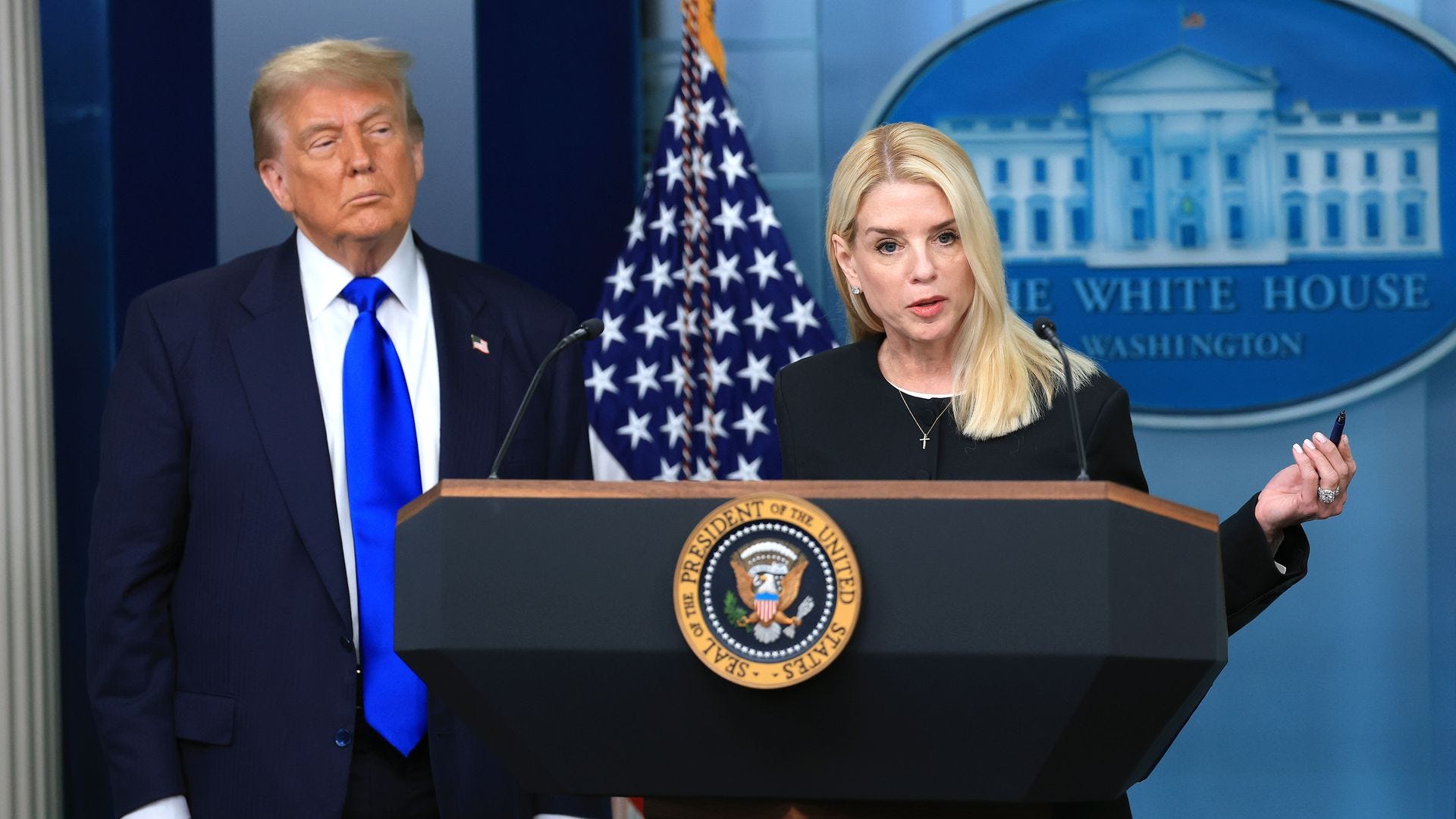
In February 2025, Bondi told Fox News a client list was “sitting on my desk right now.”
Days later, she distributed binders to conservative influencers at the White House, with the contents were largely public documents.
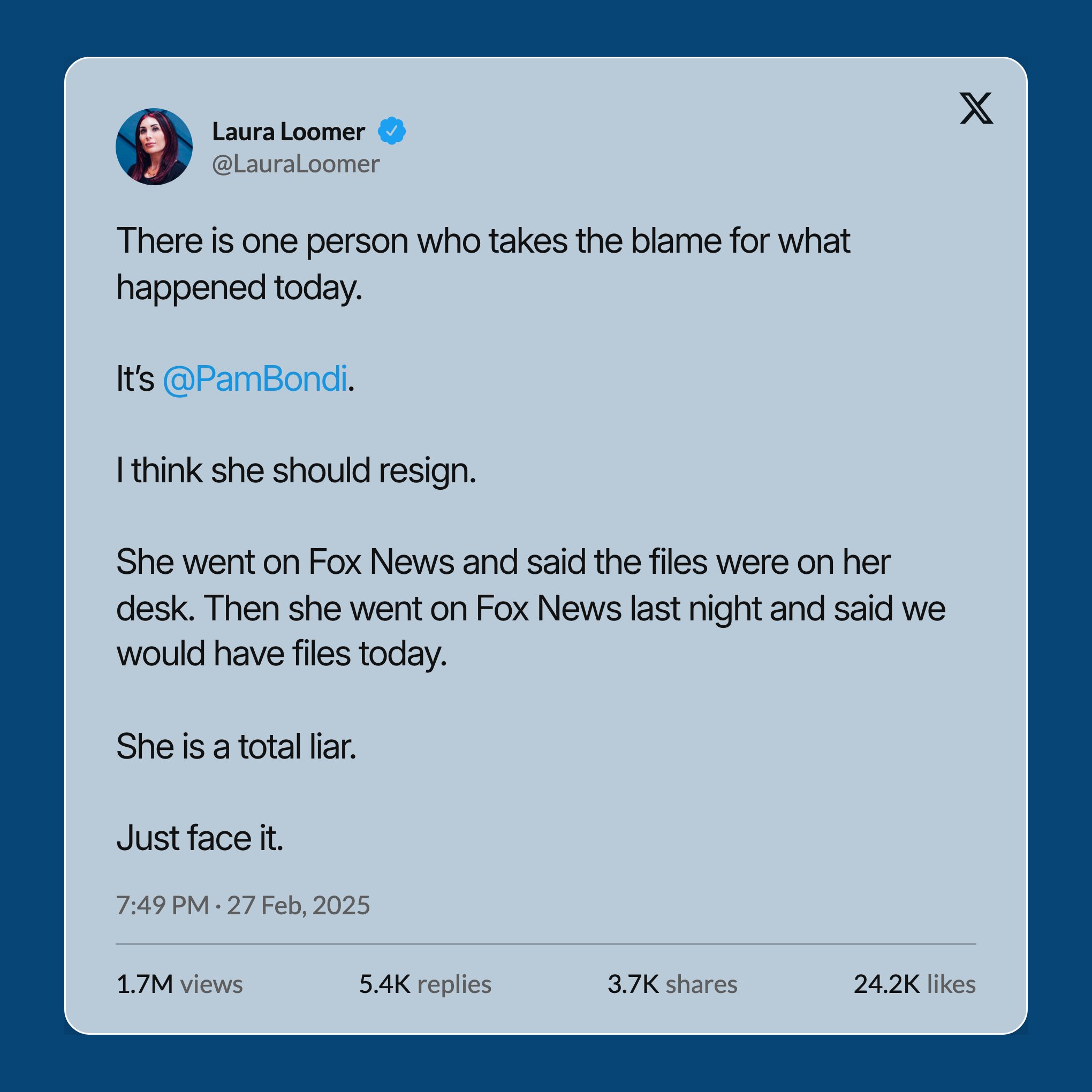
By July, DOJ issued a memo concluding no client list existed, directly contradicting her on-air promise. The MAGA base turned on her.
Laura Loomer called for her resignation.
In December, White House Chief of Staff Susie Wiles — a close Bondi ally — told Vanity Fair on the record that Bondi had "completely whiffed on appreciating that that was the very targeted group that cared about this," and had given them "binders full of nothingness."
It was a rare public break from within the West Wing itself.
Congress passed the Epstein Files Transparency Act 427–1, forcing DOJ's hand on disclosure.
When the department missed its 30-day release deadline, the House Oversight Committee subpoenaed Bondi directly, with five Republicans crossing the aisle to join Democrats in the 24–19 vote, a sign the fallout had moved well beyond partisan lines.
After Trump’s now-deleted September 2025 Truth Social post that was accidentally made public, demanding “JUSTICE MUST BE SERVED, NOW!!!,” DOJ moved fast.
Trump’s former personal lawyer Lindsey Halligan, who had never prosecuted a criminal case, was installed as interim U.S. Attorney for the Eastern District of Virginia.
She indicted former FBI Director James Comey in September and New York AG Letitia James in October.
By November 24, a federal judge dismissed both indictments, ruling Halligan’s appointment was unlawful.
Subsequent grand juries refused to re-indict James twice.
An Axios source put it plainly: “This was all about his enemies list and Pam wasn’t getting the indictments.”
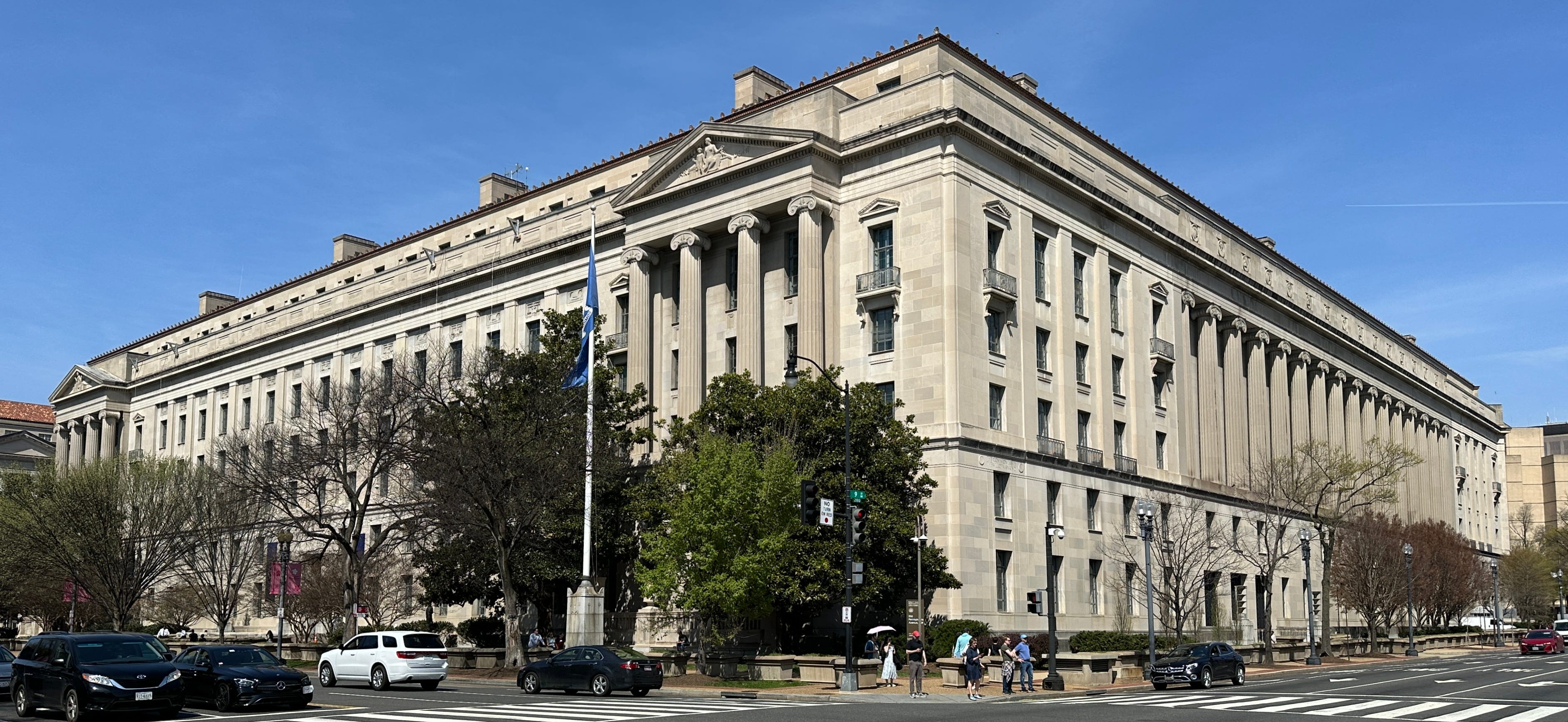
The Civil Rights Division of DOJ lost roughly 75% of its attorneys and more than 200 former employees signed an open letter decrying its "destruction."
The Public Integrity Section, the post-Watergate unit built to prevent politicized prosecutions, was gutted. Over one-third of DOJ's senior career managers, at least 107 of roughly 320, departed in eight months, taking with them what Bloomberg Law described as "centuries of combined expertise."
Justice Connection, a network of DOJ alumni, estimates more than 6,400 employees left the department across 2025 alone.
Federal judges rebuked the department repeatedly for defying court orders. Bondi defended her tenure as a necessary house cleaning of politicized career officials, pointing to crackdowns on violent crime and drug cartels.
But the bottom line was stark: she dismantled the DOJ's independence, failed to deliver the prosecutions Trump demanded, and botched the one transparency moment her own base was watching.
Bondi leaves behind an institution critics say could take generations to rebuild. She was dismissed not for going too far, but for not going far enough.
Whoever succeeds her inherits the same impossible mandate of satisfying Trump's demand for retribution inside a legal system still capable of saying no.